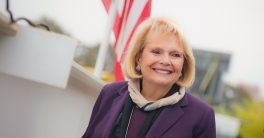
Joan Klein Jacobs, Beloved Philanthropist and Community Leader, Has Died
In MemoriamJoan Klein Jacobs, a dedicated and visionary philanthropist, civic leader and patron of the arts died on May 6. She was 91.
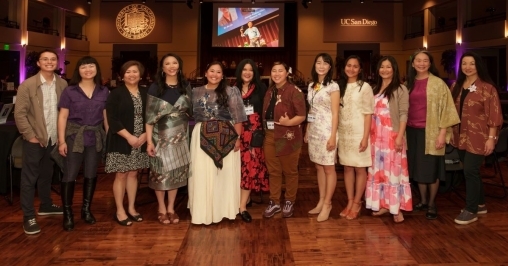
UC San Diego is celebrating Asian and Pacific Islander American Heritage Month. Learn about the 18th Annual Asian and Pacific Islander American Heritage Celebration Kickoff and Scholarship Awards, held on May 2, 2024, along with upcoming events available to the Triton community.
Joan Klein Jacobs, a dedicated and visionary philanthropist, civic leader and patron of the arts died on May 6. She was 91.
UC San Diego Medical Center earns “LGBTQ+ Healthcare Equality High Performer” designation from the Human Rights Campaign Foundation’s Healthcare Equality Index.
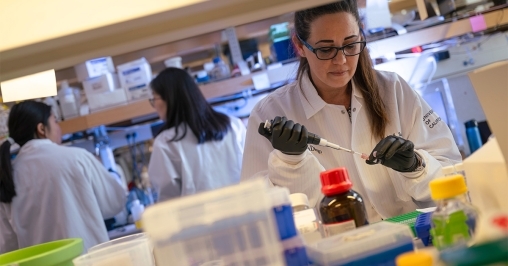
An international team of scientists has discovered a new cellular mechanism that explains how cells can adapt to pressure changes during tissue growth by packing themselves into a unique shape. Researchers at UC San Diego’s Scripps Institution of Oceanography, Stanford University’s Hopkins Marine Station, and the Institute of Biomedicine in Seville (IBiS) in Spain led the research, which is novel for its use of sea star embryos as model organisms in this context.
Early this morning, law enforcement authorities successfully removed an illegal encampment on the UC San Diego campus after five days of attempts to communicate with participants and multiple, clear requests to disperse. UC San Diego encourages and allows peaceful protests, but this encampment violated campus policy and the law and grew to pose an unacceptable risk to the safety of the campus community.
Los Angeles Times, May 5
Los Angeles Times, May 3
Newsweek, May 1
The New York Times, April 29
Newsweek, April 25
Take a deeper look into the remarkable stories of our changemakers and community-builders, our cutting-edge research, and the global influence of UC San Diego.
From exciting athletics programs and campus events, to our latest contributions to cutting-edge research—UC San Diego is a vibrant community of creators and innovators, making a positive impact both in San Diego and beyond.
The Electrical and Computer Engineering Department at UC San Diego was recognized for its pioneering hands-on lab curriculum by the leading association for electrical and computer engineering educators in North America.
Barna Saha, a computer scientist at UC San Diego who spearheads a new $10 million multi-university research institute to tackle problems in theoretical foundations of data science, was honored this week as the Harry E. Gruber Professor of Computer Science and Information Technologies Endowed Chair.
Five UC San Diego graduate students recently joined the ranks of the Bouchet Graduate Honor Society, a prestigious national organization that recognizes scholars whose commitment to social justice, diversity, leadership and academic excellence pushes the boundaries of doctoral education.
“If there's ever something that piques your interest, just volunteer to do it. See how that one time you volunteer feels—sometimes it can make you feel like you are part of a community and part of something bigger than yourself.”
“Let us let go of the past and imagine a world where every individual has the opportunity to unleash their full potential—where every career is a testament to the boundless capacity of the human spirit.”
“Prioritizing meaningful, deep connections with staff and students has been so impactful, and it’s wonderful getting to know people, learning what drives them and why they do what they do on such a diverse campus.”
Have an event to add to the UC San Diego Event Calendar? If you are a UC San Diego affiliate you can submit an event
Keep up with all the latest from UC San Diego. Subscribe to the newsletter today.