Update on Financial Planning and Sustainable Operations
Campus NewsIn a message to campus, Chancellor Khosla provides updates and shares measures that UC San Diego is taking to prepare in the midst of state and federal funding uncertainty.
Faculty Ambassadors appointed foster interdisciplinary engagement across campus and help align faculty research with key funding opportunities related to our refreshed Strategic Research Themes.
In a message to campus, Chancellor Khosla provides updates and shares measures that UC San Diego is taking to prepare in the midst of state and federal funding uncertainty.
What makes certain compositions more laudable than others? That is the age-old question. A contemporary question – one that could only be birthed in the era of GenAI– is this: will the 21st century yield a musical composer capable of stirring human emotions without being human itself?
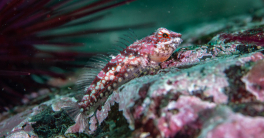
Scientists have created a new guide to advance standards for collecting and cataloging DNA from marine species, enhancing a revolutionary method for monitoring ocean biodiversity. A team of 15 scientists, including several from Scripps Institution of Oceanography, contributed to the guide.
After leaving Ukraine following the Russian invasion, Oleksandr Sharlai was determined to continue his dream of becoming an MD/Ph.D. studying the human brain. During his CADRE internship, he worked in the lab of Christine Smith, Ph.D., investigating amnesia in patients with traumatic brain injuries.
CNN, April 4
The New York Times, April 3
ABC News, April 3
BBC, April 2
TIME, April 1
Forbes, March 31
Take a deeper look into the remarkable stories of our changemakers and community-builders, our cutting-edge research, and the global influence of UC San Diego.
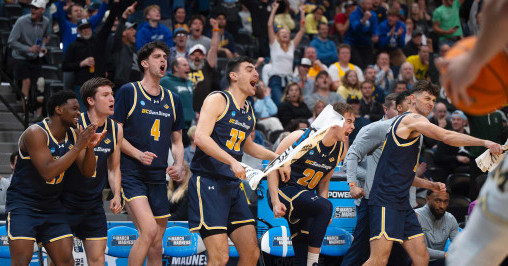
From exciting athletics programs and campus events, to our latest contributions to cutting-edge research—UC San Diego is a vibrant community of creators and innovators, making a positive impact both in San Diego and beyond.
Third-year student Madeline Balzarini shared her experience participating in the Non-Violent and Compassionate Communication Workshop Series, hosted by UC San Diego’s International Services and Engagement Office, with UC San Diego Today.
Three University of California San Diego researchers have been elected 2024 Fellows of the American Association for the Advancement of Science (AAAS), one of the world’s largest general scientific organizations.
UC San Diego Communication professor Zeinabu Davis' feature film debut "Compensation" joins Library of Congress National Film Registry. This distinction is extremely selective, with only 25 films being added each year.
“UC San Diego's unwavering dedication to innovation has been the driving force behind bringing our vision for real-time intraoperative fluorescence nerve visualization to life.”
“Being part of something that's bigger than yourself is, in my opinion, the best way to go through this life and gives you a lot of purpose every day.”
“This is a complex ecosystem, and if political leaders don’t understand it, they can do major damage when trying to adjust it. ”
Have an event to add to the UC San Diego Event Calendar? If you are a UC San Diego affiliate you can submit an event
Keep up with all the latest from UC San Diego. Subscribe to the newsletter today.