Scientists Discover a New Signaling Pathway and Design a Novel Drug for Liver Fibrosis
Health & BehaviorScientists from the University of California San Diego discovered a novel signaling pathway in liver cells, leading to a treatment for fibrosis.

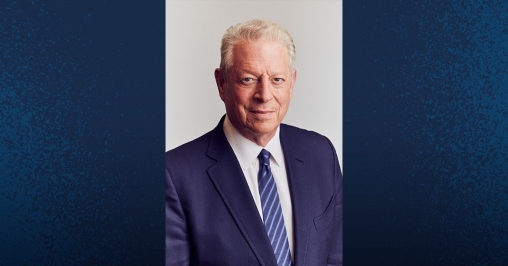
The University of California San Diego has announced that climate advocate and former U.S. Vice President Al Gore will serve as its 2024 All Campus Commencement speaker.
Scientists from the University of California San Diego discovered a novel signaling pathway in liver cells, leading to a treatment for fibrosis.
Although about 20% of the United States population live in rural areas, only 11% of physicians practice in these locations. New research from the University of California San Diego’s School of Global Policy and Strategy shows that relaxed visa requirements enable more foreign-trained doctors to practice in remote and low-income areas, without reducing employment of U.S.-trained doctors.
UC San Diego electrical and computer engineering PhD student Andrew Bourhis won the top prize at the 42nd annual Jacobs School of Engineering Research Expo for his work to integrate thin film transistors into easier-to-use flexible electrode arrays, which could enable much more precise mapping of human brain activity.
Wonjun Yim, who earned a PhD in materials science at the University of California San Diego, is one of 32 researchers selected from the world’s leading science and engineering institutions to receive a 2024 Schmidt Science Fellowship.
The New York Times, April 21
The New York Times, April 18
The New York Times, April 16
USA Today, April 16
The Washington Post, April 15
National Geographic, April 11
Take a deeper look into the remarkable stories of our changemakers and community-builders, our cutting-edge research, and the global influence of UC San Diego.
From exciting athletics programs and campus events, to our latest contributions to cutting-edge research—UC San Diego is a vibrant community of creators and innovators, making a positive impact both in San Diego and beyond.
UC San Diego’s Office for Equity, Diversity, and Inclusion created the Tritons Belong initiative to engage the campus community in times when many are struggling with a significant issue.
A University of California San Diego current graduate student in the Department of Theatre and Dance and an undergraduate alumna from the Department of Bioengineering are are among 30 recipients of the 2024 Paul & Daisy Soros Fellowship for New Americans.
Niraj Dangoria has been appointed Vice Chancellor for Operations Management and Capital Programs. Dangoria will supervise a diverse portfolio of critical areas vital to the overall operations of UC San Diego including the Health System. Reporting to the Chancellor and as a member of the Chancellor’s Cabinet, Dangoria will join UC San Diego in July 2024.
“Let us let go of the past and imagine a world where every individual has the opportunity to unleash their full potential—where every career is a testament to the boundless capacity of the human spirit.”
“Prioritizing meaningful, deep connections with staff and students has been so impactful, and it’s wonderful getting to know people, learning what drives them and why they do what they do on such a diverse campus.”
“Together, we can build a world where we don’t have to question whether our basic human rights will be met. It takes hard work as a collective to try to battle systemic issues that are larger than us.”
Have an event to add to the UC San Diego Event Calendar? If you are a UC San Diego affiliate you can submit an event
Keep up with all the latest from UC San Diego. Subscribe to the newsletter today.